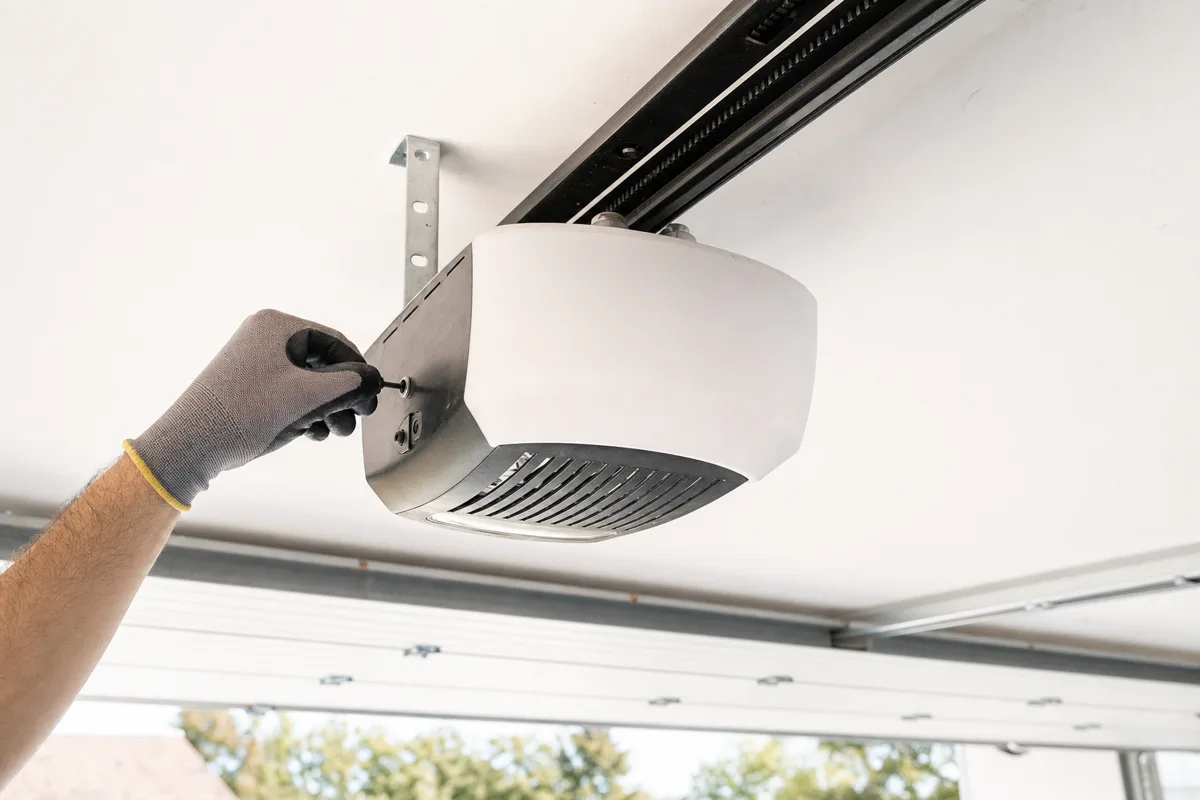

Garage Door Opener Repair
Motor, sensor, logic-board and drive faults diagnosed without masking door problems.
View serviceThe door starts down and comes straight back up. Or it stops a hand's width above the floor and gives up. Before reaching for the force adjustment, work through the safety beam and the threshold, because that is where the answer usually is.
Clear the threshold and the beam path, then wipe both photo-eye lenses and check their indicator lights and brackets. A broken, dirty or misaligned beam is the single most common reason a door refuses to close. If the beam looks correct and the door still reverses, look for ice at the seal, a damaged roller, a bent track or an uneven bottom gap. Never increase the closing force to push a resisting door shut.
A closing door needs two conditions satisfied: an unbroken photo-eye beam across the opening, and a travel path that offers no more resistance than the operator expects. When either fails, a modern opener reverses rather than pressing on, and that reversal is information rather than a malfunction. Work through the checks in order, keep people, pets and vehicles clear of the doorway, and make only one closing attempt after each check so you know which change mattered. Do not hold the wall button down to force a close, do not turn up the closing force, and do not tape or bypass a sensor. A door that reaches the floor and bounces back has a different story from one that tilts, scrapes or shows a slack cable — the first is usually controls or an obstruction, the second is mechanical and should be left alone.
Start at the top. The early checks are the most common causes and need no tools.
Move bins, tools, sports equipment and anything crossing the opening, then look along the entire bottom seal for a stone, a curled mat, packed snow or a ridge of ice. On Pickering driveways that fall toward the garage — common on the valley-edge lots above the Rouge, Petticoat and Duffins creeks — meltwater collects exactly at the threshold. Make one closing attempt after clearing, and note precisely where the door stops.
What it means: A clean close after clearing the threshold means the fault was an obstruction, not the door.
The two sensors sit low on opposite vertical tracks, usually within 15 cm of the floor. Wipe each lens with a dry cloth, clear cobwebs and stored items out of the beam path, and check that neither bracket has been knocked or twisted. Compare the indicator lights against what that opener normally shows. Do not cover a lens or aim a sensor at itself to make the door run.
What it means: A flickering or absent sensor light points at the safety circuit rather than the door.
If the door only misbehaves at one time of day, hold a piece of card beside the receiving sensor to shade it — without covering the opening or moving the sensor — and try one normal close. Direct low sun off snow can flood a receiver so it can no longer see its partner's beam, and with about 101.7 cm of snow a year at the nearest reporting station there is usually snow to reflect it.
What it means: A successful close while the receiver is shaded indicates light interference, not a failed sensor.
Stand where both bottom corners are visible and give one normal closing command from the wired control. If the door will only close while you hold the button, treat that as the opener telling you the safety circuit is unhappy — it is a diagnostic result, not a workaround to keep using. Check whether the control's lock feature has been switched on by accident.
What it means: Hold-to-run closing almost always means the photo-eye circuit needs attention.
On the last attempt, look for one side dropping ahead of the other, a roller lifting out of its track, a visible bend in the track, or a lift cable that has gone slack or jumped its drum. Also check the bottom gap across the width when the door is closed. Any of these is mechanical, and testing further will make it worse.
What it means: Uneven travel, a slack cable or a roller out of track means stop using the door and book service.
Stop testing immediately and keep everyone away from the opening if you see a broken spring, a slack or frayed cable, a roller out of its track, a door hanging visibly crooked, or a section pulling away where the opener arm attaches. Never bypass, tape over or re-aim a photo eye to force a close, and never raise the force setting to overcome resistance — the force limit is part of what makes the safety reversal work. Do not stand or reach under a door you have any doubt about, and do not pull the emergency release while the door is raised.
In Pickering this problem has a clear winter pattern. Water arriving at the threshold on ravine-edge and creek-side lots, and Durham Region's baseline of roughly 80 freeze-thaw cycles a year, means ice ridges under the seal are a genuine and repeated cause here rather than a rare one. Low sun off Lake Ontario and off fresh snow accounts for a second cluster of calls, particularly on south-facing driveways in Bay Ridges, West Shore and Rosebank. In Seaton and Duffin Heights the more common finding is different again: photo eyes knocked out of alignment by landscaping or construction traffic, and builder travel limits left at factory defaults on doors barely a year old.
Fill out the form and we'll confirm your appointment by email.
These guides are written for Pickering homes. If the fix is beyond a homeowner check, we work everywhere inside this area.
Map data © Google. Pin shows the service area, not a walk-in location — all work is done at your home.

A real callout, not stock imagery.
A sectional door pulled off its tracks, taken down and supported on site so it could be checked and re-hung safely — photographed on the job.
