
Garage Door Maintenance & Tune-Up
Seasonal checks that catch wear before a Durham winter finds it first.
View detailsWorn rollers and bent guides corrected so the door runs quiet and square.

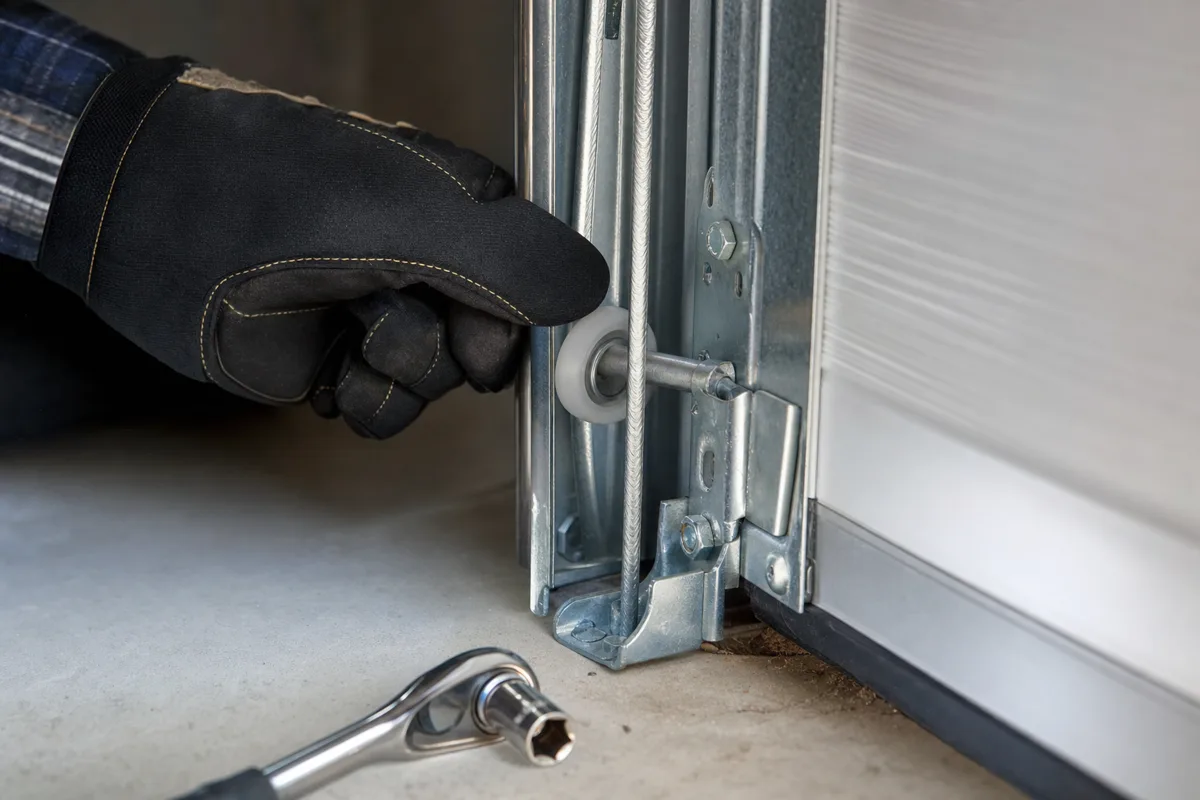
Rollers and track are what keep a garage door travelling in a controlled path, and when they go wrong the door tells you long before it fails. It gets loud. It shudders on start-up, bangs through the curve, drags on one side, or reverses just before it lands. Rollers wear at the stem and in the bearing; track gets bent by impact, works loose at the brackets, or drifts out of alignment as the framing behind it moves. Left alone, a bad guide path takes the rest of the door with it, because a door that cannot run freely puts the difference through the cables, the counterbalance and the opener instead.
Rollers are consumables. Replacing a full set on an older door is one of the highest-value pieces of work available, because it removes noise, reduces the load on the counterbalance and the opener, and usually costs less than the failures it prevents. Track is different: a straight, well-fixed track can outlast several sets of rollers, while a bent or corroded section is not worth nursing. Where framing behind the track has deteriorated — common in older detached garages in the hamlets — the fix is to re-establish sound backing rather than to keep re-tightening brackets into soft wood.
Work through the symptom first — some of these turn out to need no technician at all.
Steel rollers with unsealed bearings and nylon rollers with worn stems both develop play, which lets the door move laterally in the track. That is the rumble and the shudder, and it accelerates wear on the track itself.
A vehicle nudging the door, a bicycle falling against the vertical track, or a door driven against an obstruction bends the guide. In tight townhouse driveways such as those in Village East and Duffin Heights, this is the most common cause of all.
Leaf litter, road grit and sand collect in the bottom of the vertical track, especially on valley-edge lots and rural driveways. The bottom rollers then climb over the debris, which reads as a bang or a stall at the last foot of travel.
Track brackets fixed into old or damp framing can work loose, letting the horizontal rail sag or the vertical track pull away from the jamb. The door then runs progressively out of square without any single component having broken.
Two Pickering conditions drive guide-path work. The first is the valley edge: with the Rouge, Petticoat and Duffins systems cutting through the city, a large share of homes sit on ravine lots where leaf litter and damp collect in the bottom track, and Rosebank, Rouge Park, Highbush and Greenwood all have properties against park, valley or conservation land. The second is tight driveways. Village East is 33 per cent row housing, Duffin Heights 37 per cent, and Seaton street townhouses start at 6 metres of frontage per unit, so vehicles park close to doors and impact damage to vertical track is a routine finding rather than an unusual one.
Do not keep running a door that is grinding, dragging or reversing near the floor, because each cycle drives a small misalignment into a bigger one and can pull the door out of its track entirely. Keep fingers away from the gap between rollers and track and from the hinge points between sections. Do not attempt to lever a bent track back into shape with the door hanging in it, and do not increase the opener's force to push a door through a section it is refusing to travel; the reversal system is a safety device, not an obstacle.
The door is run and observed through its whole travel, because the point at which it protests identifies the section of track or the roller involved far more reliably than an inspection of a stationary door.
Every roller is checked for play and bearing condition, the vertical and horizontal track are checked for dents, splay and alignment, and all brackets and their fixings into the framing are checked for movement.
Worn rollers are replaced, damaged track is straightened where it can be and replaced where it cannot, brackets are re-secured into sound framing, and the track is realigned so the door runs square with even clearance on both sides.
The door is cycled by hand to confirm it runs freely and lands level, then the opener is reconnected and its force and travel settings are checked, since a door that now runs freely needs less force than it did.
Seasonal checks that catch wear before a Durham winter finds it first.
View details
Frayed, slipped or snapped lift cables renewed and re-tensioned evenly.
View details
Stabilising doors that are stuck open, hanging crooked, or unsafe to touch.
View detailsFill out the form and we'll confirm your appointment by email.
Garage Door Roller & Track Repair is available across every Pickering neighbourhood inside the area below.
Map data © Google. Pin shows the service area, not a walk-in location — all work is done at your home.
A real callout, not stock imagery.
A sectional door pulled off its tracks, taken down and supported on site so it could be checked and re-hung safely — photographed on the job.